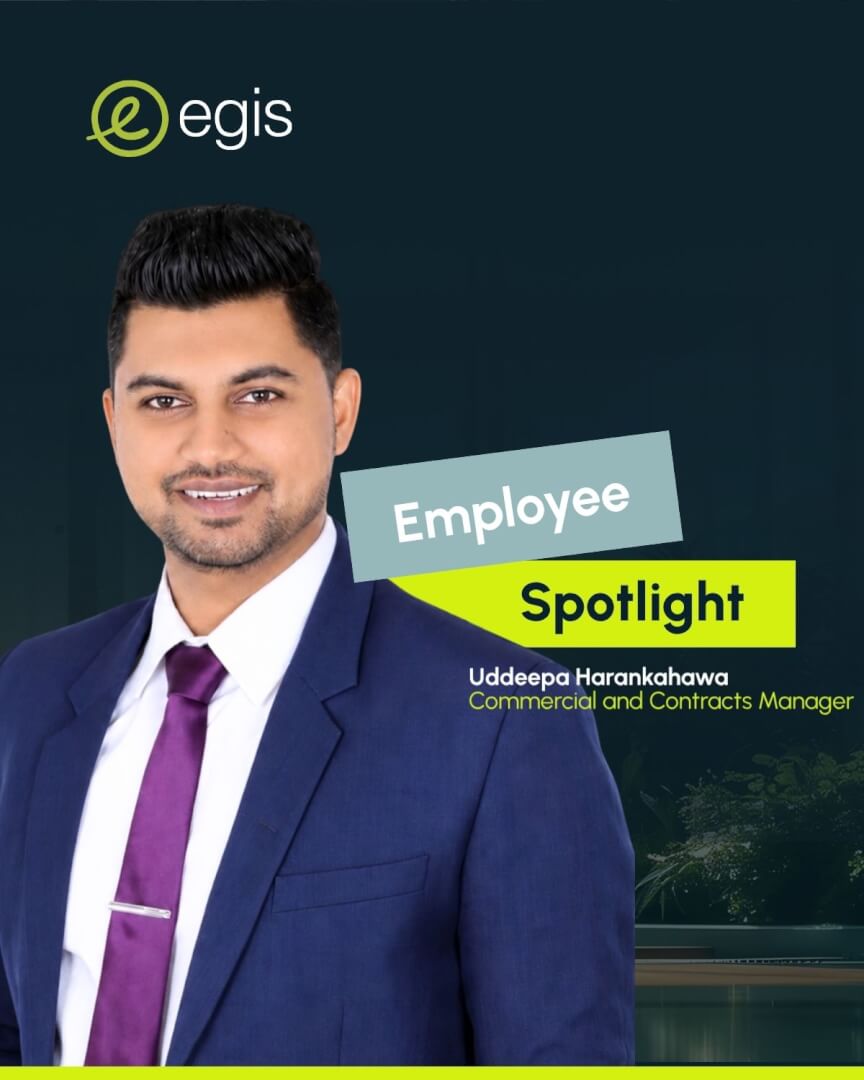
Your recent FRICS Fellowship marks an important milestone in your career. Looking back on your journey, how has achieving it changed the way you see your role and responsibility within the profession?
Achieving FRICS is undoubtedly one of the proudest milestones of my professional journey. More than a personal achievement, I see it as a responsibility to contribute more meaningfully to our profession.
The Fellowship reinforces the importance of leading with integrity, sharing knowledge, mentoring future professionals, and helping raise standards across the industry. It has shifted my perspective from focusing solely on delivering successful projects to thinking about the broader legacy we leave developing people, improving commercial practices, and creating sustainable value for clients and communities.
For me, FRICS is not the destination; it's a commitment to continuous learning and giving back to the profession that has shaped my career.
Having worked on both the contracting and consultancy sides, what are the biggest lessons you've taken from each, and how do they influence the way you approach commercial decisions today?
Every commercial position looks different depending on which side of the table you're sitting at, and the best professionals never forget that.
On the contracting side, I learned where cost truly comes from and how hard-won every dirham of margin is. On the consultancy side, I learned the discipline of independence, valuing fairness, even when it's not the answer someone wants.
Having lived both realities, I know that contractors focus on execution, cash flow, and commercial risk, while consultants must protect objectivity and long-term project success. The best commercial decisions rarely come from defending a single position; they come from understanding the pressures and priorities of every stakeholder.
Today, when I assess a claim or negotiate a variation, I run both perspectives simultaneously. It makes me a tougher negotiator but also a fairer and more collaborative one too.
When people think about commercial management, they often think of contracts and cost. What do you wish they understood about the role that they don't usually see?
People often see commercial management as numbers, contracts, and claims, but behind every commercial decision are relationships, trust, and communication.
A well-managed project depends on aligning diverse teams with different objectives while maintaining confidence between clients, consultants, contractors, and suppliers. Often, the most valuable commercial outcome is preventing a dispute before it happens through early engagement, clear communication, and proactive risk management.
Commercial professionals also play an important strategic role in influencing decisions that affect programme certainty, sustainability, stakeholder confidence, and long-term value, not just project cost.
Was there a project or defining moment in your career that completely changed the way you think about risk, value, or what success really looks like?
The DEWA "Al Sheraa" headquarters project reshaped my thinking. It was technically dense—a landmark sustainable building with a huge photovoltaic system, and the scale of design development meant variations and claims that could have spiralled into real conflict. What changed my perspective was seeing, firsthand, that the projects that stay out of dispute aren’t the ones with the fewest problems; they’re the ones where records are kept honestly from day one and issues are surfaced early. Success stopped meaning "no problems" for me and started meaning "well-managed problems."
From Qiddiya and Red Sea/AMAALA to Expo City and Arabian Ranches, you've contributed to some of the region's most significant developments. How have these projects shaped your perspective on creating long-term value?
Working across projects like Qiddiya, Red Sea/AMAALA in KSA and Arabian Ranches, Expo City in UAE, taught me that long-term value is rarely about the lowest capital cost it's about decisions made early that either compound well or compound badly over decades. A masterplan community, or a piece of energy infrastructure these outlive the people who build them. That's made me a much stronger advocate for genuine value engineering and whole-of-life thinking, rather than simply chasing the cheapest number at tender stage.
Your experience spans quantity surveying, construction law, arbitration, and commercial management. How do these different disciplines come together when you're solving complex project challenges?
They rarely operate one at a time the hard problems sit exactly at the intersection.
A contested variation isn’t just a measurement question; it’s often a legal interpretation question, a negotiation question, and sometimes a "how would this look in front of a tribunal" question, all at once. My LLM and expert witness training mean I don’t just build the number—I stress-test it the way a dispute would. That combination is genuinely rare, and it’s the thing I lean on most when a project problem doesn’t have an obvious textbook answer.
As infrastructure projects become increasingly complex and collaborative, what advice would you give to the next generation of commercial professionals looking to build a successful career?
Technical competence will always remain fundamental, but the future commercial professional will need much more than technical knowledge.
They will need strong communication skills, emotional intelligence, commercial awareness, negotiation capability, data literacy, and the confidence to influence strategic decisions. As digital technologies and AI become increasingly integrated into project delivery, professionals who can combine technology with sound commercial judgment will create the greatest value.
Equally important is curiosity and continuous learning. Our industry is evolving rapidly, and those who embrace change while maintaining strong ethical standards will be best positioned to lead the next generation of infrastructure delivery.





.png)


