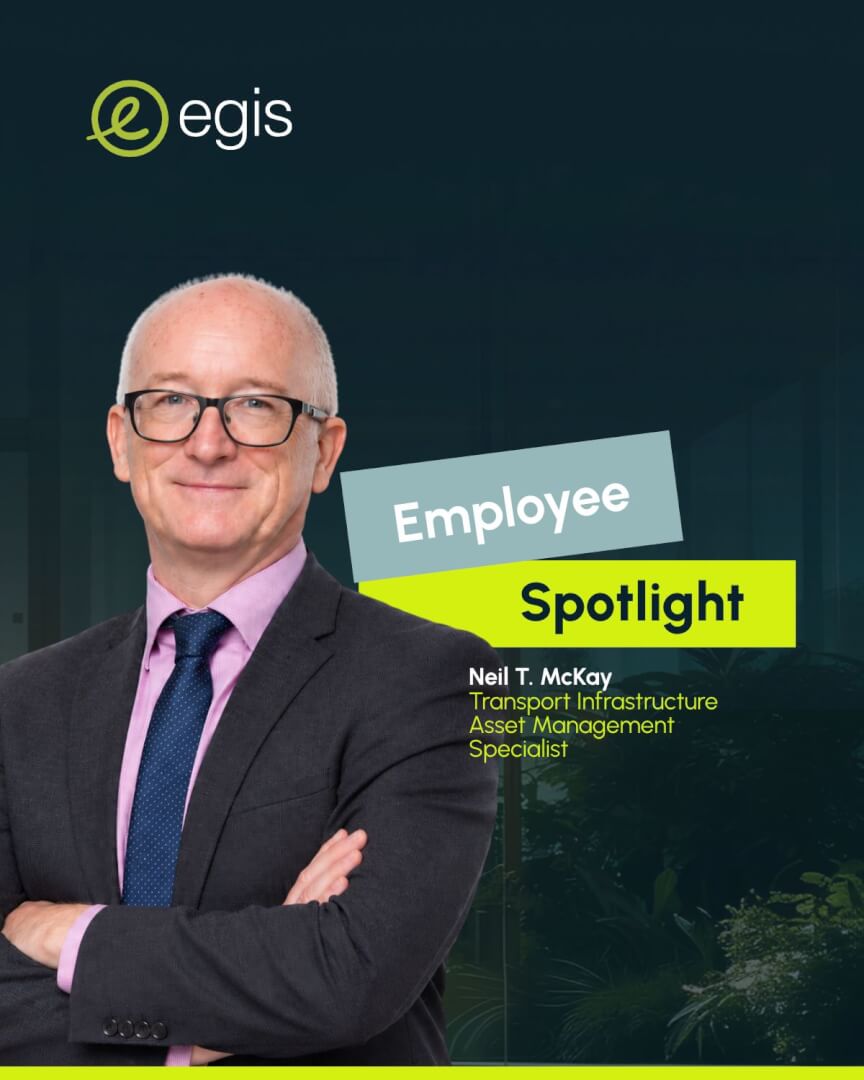
Everyone says you’ve got a saying for every situation. Which one do people hear from you the most?
‘Less is more.’ When you’re new to the region, whether you’re an individual consultant or a global firm, it’s tempting to show everything you know. But the work gets complicated enough on its own. There’s no need to write thousands of words or build something elaborate to prove your competence, or to feel more confident in the approach. Most clients want advice they can use, and that usually means keeping it simple.
You started out in 1986 at a nuclear power station, and since then you’ve been with nearly 20 organisations on three continents. Be honest: is that a lot of moving around, or is that the secret behind what you do now?
‘There’s more than one right answer.’ Working in so many different places has given me a lot of examples of what good looks like, and my job is to put those to work for the client. But most right answers are specific to the situation they came from, so each one needs stress-testing against the client’s own circumstances, and some need softening before they’ll be accepted. The work is in blending them into the best solution for that client.
Picture this: you’re at a dinner party, and someone says asset management is “just maintenance.” You’ve got 30 seconds. What do you tell them?
Maintenance and asset management are like chequers and chess. They’re played on the same board, with the same assets, but asset management has far more moves available. Maintenance meets reality head-on and works in straight lines. Asset management plays the long game, where the highs and lows can be cyclical and sometimes big sacrifices are made.
You can also lose ‘the game’ with most of your pieces still on the board: poor design, weak asset registers, messy handovers or putting off big decisions can mean a slow defeat and a fresh start. My father, a mechanic, taught me chequers; my headmaster taught me chess. I’ve needed both.
So what does a normal week look like for you at Egis? Where do you even start with a ministry or a big PPP client?
‘The best thing about this team is the highly intelligent people.’
With clients, it’s all about asking questions and listening, not just to what’s said but to what isn’t. What pressures is the client under? That’s harder when the people across the table aren’t the ones making the final decisions.
With the team, a consultant needs a bit of the academic, the technologist, the analyst and the strategist, and each strength comes with a blind spot. The idealist can build a recommendation without checking it’s feasible. The technologist can reach for an IT solution before understanding the problem, when the client often already has a system they just can’t get the most from. The analyst can start strong and lose momentum. The generalist can assume every problem is basically the same. Keeping all that talent focused on what the client actually needs is a big part of the job.
You’ve written policy that went all the way to board approval. How do you stop a policy from becoming that document everyone signs and nobody opens?
‘When we have to pull out the contract, we know we’re in trouble.’ Any change needs some excitement and emotion behind it. The excitement might come from recognition by senior management, as an approved policy is a credential any organisation can be proud of. The emotion might come from urgency, because other parts of the transformation need the policy in place first.
A policy should stand the test of time. It sets the principles that guide strategy without constraining it. It should last at least five years without revision, though it should be reviewed every year, so it shouldn’t feel like a constraint or a high-maintenance document: plug-and-play, fit-and-forget. That said, policies in the Middle East generally need to be more prescriptive. Context shapes every solution.
What’s the mistake you see organisations make with their assets again and again? And how much does it usually cost them?
‘Finders, keepers.’ Not sharing the asset register across the organisation. I think there’s a sense that whoever built the register owns the assets, and whoever owns the assets controls them.
Almost always, for example, the IT department keeps its own register of IT equipment, and, ironically, that information isn’t available electronically to finance for depreciation, or to facilities management for electrical testing or planning office moves. Whether it’s airport hardstanding, restroom consumables or kilometres of road, most organisations end up with duplicate and contradictory registers.
Good asset management is a bit invisible. So how do you get clients to see the value in something that didn’t go wrong?
‘Plans are worthless, but planning is everything.’ Would you drive your car without a fuel gauge? Asset management looks at a building, a road or a water treatment plant through a 30-year lens.
How will those windows be cleaned so the building looks cared for? If that tunnel floods, how long is the diversion and how much are drivers inconvenienced? How will maintenance teams measure the degradation inside the plant’s pipework so they can act before a catastrophic failure and loss of service? Savings made at the design stage can have lasting consequences.
Let’s talk about the buzzword in the room. Data and AI: real game-changer for asset management, or are we all just very excited?
‘A place for everything, and everything in its place.’ Data has always been the backbone of asset management. Analysis doesn’t have to be complex; simple cause and effect is often enough, as long as you remember that coincidence isn’t causation. AI is good at spotting patterns, but those patterns need checking against practical logic.
Where I think it will really help is in finding conflicts in documentation. I’ve seen RFPs and bid documents combined and presented as contract documents, despite clear contradictions between what the client wrote and what the contractor wrote. AI could catch that, and the same checking could extend to service level agreements, risk assessments, business processes and RACIs, and data audits.
The Gulf is building at an incredible pace right now. Why should the people paying for all that infrastructure care about what happens after the ribbon is cut?
‘Fail to prepare, prepare to fail.’ Dubai is a good example of a bow-wave of construction reaching its 30th birthday: buildings, roads, bridges, water, sewage and power systems all coming of age in the same decade. With good-quality data (the right data, with an unbroken history), asset management can recommend schedule adjustments that smooth out the financial demands, technical performance and impact on users as assets reach their later years.
People who invest in infrastructure aren’t only thinking about financial returns. There’s pride in how it looks and in the legacy it leaves. Throughout an asset’s life, they balance cost, performance and risk to keep that ambition on track, and in the Gulf especially, that sense of ownership tends to stay with them.
Last one. If a client could take just one of your mantras into their next board meeting, which one would you slip into their pocket?
So many to choose from. Parsimony. Quote poetry. Good, fast and cheap – choose two. Don’t let perfection get in the way of a good job.
If it has to be one: stay curious. If the meeting, the project or the team isn’t going the way you expected, don’t get mad – get curious.