
JUMP TO CONTENT

Learning Across Cities: What Tehran, London, and Dubai Taught Mamali About Architecture

Posting date: 14/08/26

Learning Across Cities: What Tehran, London, and Dubai Taught Mamali About Architecture

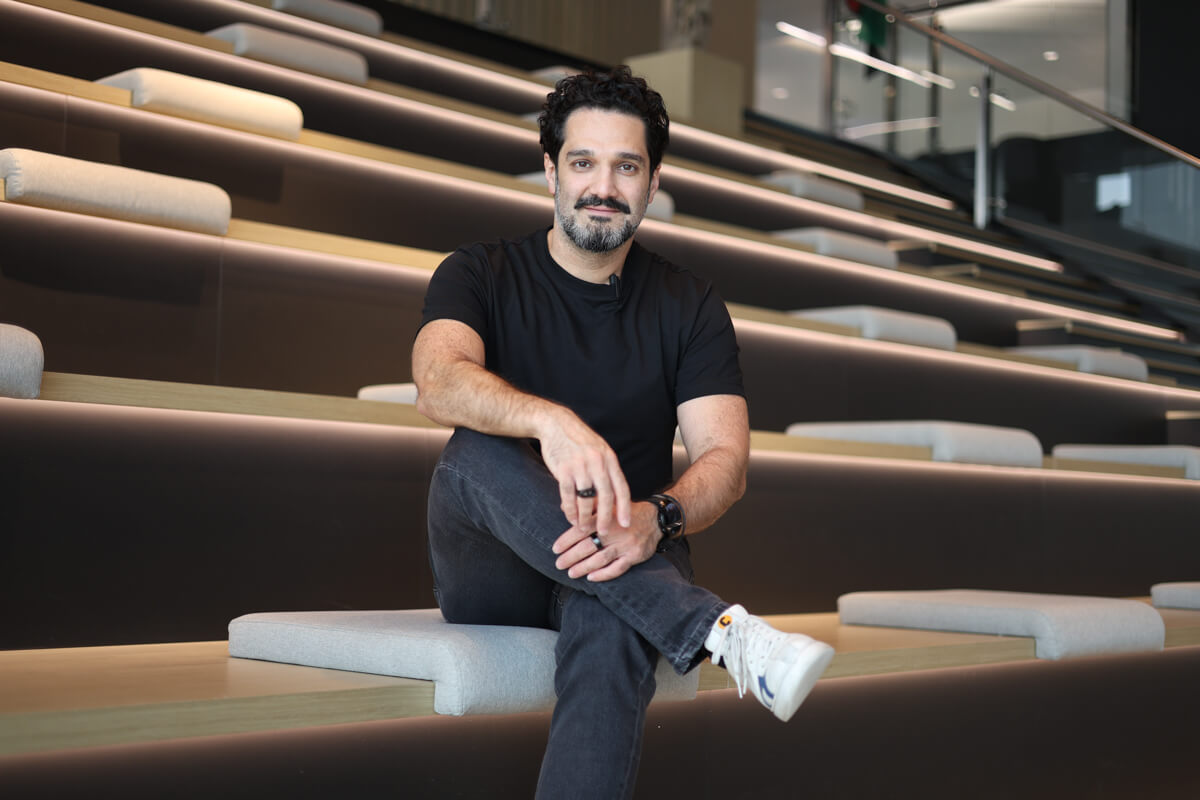
Mamali is a Project Director at U+A with excellent team-leading and communication skills. He has more than 20 years of experience in architecture, delivering multi-million-dollar public, mixed-use, residential, and hospitality projects, including transportation hubs and museums.. While in the UAE, he has been fully involved with a prestigious five-star hospitality and villas cluster design and development in Abu Dhabi. An expert at breaking down large-scale projects into manageable chunks and is well capable of leading multiple teams of architects and engineers. Overseeing technical standards, he makes sure the design outcome meets both architectural and constructability criteria. Mamali is also renowned for clear and persuasive presentation skills that align design solutions with project goals and client expectations.

Can you take us back to one of your first major projects in Tehran and describe a moment that shaped the architect you became?

One of the projects that shaped me most as an architect was a major metro station in Tehran, located at one of the city's key roundabouts. I was fortunate to be involved from the earliest design stages, which gave me a unique opportunity to think beyond the station itself and consider its role within the larger urban fabric.

The site was a busy transit node, but it had lost its identity as a public place. Our vision was to transform it into more than just a transportation hub. We wanted to create a space where people could pause, connect, and experience the city, while ensuring the station could function efficiently during peak-hour congestion.

What had the biggest impact on me was realizing that the real challenge was balancing functionality with human experience. Every design decision had to respect the community, reconnect with the historic soul and collective memory of Tehran, and at the same time deliver a seamless transit experience.

That project taught me that architecture is not just about creating buildings. It's about revitalizing places, strengthening connections between people and their city, and ensuring that even highly functional infrastructure can become a meaningful part of everyday urban life. It's a lesson that continues to guide my work today.

After building your early experience in Tehran, what prompted you to move to London, and what were you hoping to find or become there?

After gaining my early experience in Tehran, I became fascinated by a different way of thinking about architecture. I was increasingly drawn to design approaches that went beyond intuition or form-making and instead began by analytically deconstructing all the factors that shape a project, from the tangible requirements such as movement, infrastructure, and environment, to the less tangible aspects of human behavior, social interaction, and even how a place might evolve over its future lifespan.

London attracted me because it was home to the Architectural Association, where this kind of bottom-up, research-driven design thinking was deeply embedded in the culture. I enrolled in the master’s program in Emergent Technologies and Design, eager to challenge my assumptions and expand my understanding of what architecture could be.

I wasn't simply looking to learn new design tools. I was looking to become an architect capable of navigating complexity, someone who could translate data, human experience, and future uncertainties into meaningful and resilient spaces. The move to London was a pivotal step in that journey. It exposed me to new ways of thinking, collaborating, and innovating, and ultimately reinforced my belief that architecture is most powerful when it responds not only to today's needs, but also to the possibilities of tomorrow.

When you first began working in London, what was the first project, meeting, or experience that made you realise the professional culture was different?

After finishing my master's, joining Zaha Hadid Architects felt like a natural continuation of a journey that had started years earlier. I had long been inspired by Zaha's work, not only because of its organic and complex forms, but because those forms were never arbitrary. They emerged from a deep process of analyzing and synthesizing the many forces that shape a project.

The moment I realized the professional culture was different was during my first experience working on projects at the practice. I was struck by how early and how intensively architects, engineers, specialists, and consultants collaborated. Design was not developed in isolation and then handed over for validation. Instead, it evolved through continuous dialogue between disciplines from the very beginning.

What resonated with me most was how closely this aligned with the design philosophy that had attracted me to London and the AA in the first place: understanding and deconstructing all the tangible and intangible factors influencing a project, then allowing the design to emerge from that complexity. At ZHA, this analytical rigor was paired with an elegant and ambitious design language, proving that rationality and creativity were not opposing forces but complementary ones.

That experience reinforced an important lesson for me. The most innovative and beautiful projects are rarely the result of individual vision alone. They emerge from extensive coordination, collaboration, and the ability to bring together diverse expertise into a cohesive whole. Seeing that process in action at such a high level was when I truly understood that architecture is as much about orchestrating knowledge and people as it is about designing space.

After four years of practice in Tehran, what did you have to change in yourself when you began working in London? What is the difference in design approach in these two cities? 

After four years of practice in Tehran, the biggest change I had to make when I moved to London was expanding my perspective of what it means to be an architect.

In Tehran, I was largely focused on shaping the vision and developing the design concept. The architect was often seen as the creative lead, driving the project through its key design stages. When I arrived in London, I discovered that architecture was equally about managing complexity and taking responsibility for how a project is delivered.

What challenged me most was the level of coordination required. Projects involved internationally recognized clients, world-class consultants, and major contractors, all contributing their expertise from the earliest stages. Every design decision had to be justified, coordinated, documented, and aligned with demanding international standards. It was no longer just about creating a compelling concept, but ensuring that concept could withstand rigorous technical, commercial, and operational scrutiny.

Personally, I had to become more collaborative, more detail-oriented, and more conscious of the long-term implications of every design decision. I learned to think beyond the drawing board and consider how a building would be constructed, operated, and perform years after completion.

Looking back, Tehran taught me the power of vision and design thinking, while London taught me the discipline of delivery. The combination of those two experiences has shaped the architect I am today, someone who is passionate about creating ambitious ideas, but equally committed to turning them into successful and lasting places.

What did working across different cultures teach you about communicating when people do not share the same expectations?

Working across different cultures taught me that communication is ultimately what connects people, regardless of where they come from. While cultural differences can sometimes appear as barriers, I have found that the real challenge is often not culture itself, but the different experiences, expectations, and perspectives that people bring to a conversation.

What helped me most throughout my career was developing an analytical approach to communication, similar to how I approach design. When a message is not immediately understood, I try to break it down into its core components, looking at the technical, commercial, social, and human aspects separately. By understanding what matters most to each audience, whether a client, engineer, contractor, authority, or community stakeholder, it becomes easier to communicate the same idea in a way that resonates with them.

Over time, I realized that despite our differences, there are always common human experiences that create a basis for connection. People may have different priorities, but they all care about things such as trust, clarity, purpose, and creating something meaningful. Finding that common ground helps bridge gaps, build stronger relationships, and ultimately leads to better outcomes.

For me, working across cultures has reinforced the belief that successful communication is not about speaking louder or more persuasively. It is about listening carefully, understanding different perspectives, and translating complex ideas into a language that people can connect with. That ability has become one of the most valuable skills in both my professional and personal journey

After your experience in these 3 cities, if your architectural career were represented by three buildings: one from Tehran, one from London, and one from Dubai, which qualities would each building represent?

If I were to represent my architectural journey through three buildings, each would reflect a different lesson from a different city.

The building from Tehran would represent my roots: culture, values, and the collective memories that shape everyday life. It is where I learned that architecture must be deeply connected to people and place.

The building from London would represent thoughtfulness and collaboration. It would be shaped by rigorous analysis, diverse expertise, and a truly collective design process. London taught me that great architecture emerges from many voices working together toward a common goal.

The building from Dubai would represent integration and evolution. It is where the cultural grounding of Tehran and the collaborative rigor of London come together. A building that can express its own identity while serving its community and anticipating future needs.

In many ways, my journey has been about bringing these qualities together:

Tehran gave me my foundation, London shaped my mindset, and Dubai gave me the opportunity to combine both into a more complete vision of architecture

Follow us

Sofia Filipchenkova our consultant managing the role
List #1

Related Articles

Designing for the Senses with Hala Mohamed: The Relationship Between Materiality, Memory, and Emotio

Teaser

Interview

Content Type

Testimonies

Publish date

07/22/2026

Summary

Designing for the Senses with Hala Mohamed: The Relationship Between Materiality, Memory, and Emotion Hala Mohamed is a Senior FF&E Designer at U+A with experience across hosp

Teaser

Hala Mohamed is a Senior FF&E Designer at U+A with experience across hospitality, residential, commercial, and educational developments in the UAE, GCC, and Egypt.

Read more
Sofia Filipchenkova

by

Sofia Filipchenkova

Sofia Filipchenkova

by

Sofia Filipchenkova

Built for Today, Designed for Tomorrow

Teaser

Article

Content Type

Testimonies

Publish date

07/06/2026

Summary

Built for Today, Designed for Tomorrow Sustainability in architecture today is no longer an added value; it is a fundamental responsibility. As the built environment continues t

Teaser

Sustainability in architecture today is no longer an added value; it is a fundamental responsibility.

Read more
Sofia Filipchenkova

by

Sofia Filipchenkova

Sofia Filipchenkova

by

Sofia Filipchenkova

Cobus Terblanche: A Human Centric Processes: The Value of Collaboration in a Profession

Teaser

Tst Company update

Content Type

Testimonies

Publish date

06/11/2026

Summary

Cobus Terblanche: A Human Centric Processes: The Value of Collaboration in a Profession Defined by Constant Change, Conflicting Demands, and High-Stakes Decisions Cobus Terbla

Teaser

Cobus Terblanche is an Associate Architect with more than a decade of experience across South Africa and the Gulf region, delivering projects in the healthcare, hospitality, residential, and education sectors.

Read more
Sofia Filipchenkova

by

Sofia Filipchenkova

Sofia Filipchenkova

by

Sofia Filipchenkova

Designing with Purpose: The Role of Materiality and Color in Design

Teaser

Article

Content Type

Testimonies

Publish date

06/11/2026

Summary

Designing with Purpose: The Role of Materiality and Color in Design Each successful interior space is a blend of the right materials with careful planning. Materials are

Teaser

Each successful interior space is a blend of the right materials with careful planning. Materials are functional, but they also define the character, texture, and ambience of a space.

Read more
Sofia Filipchenkova

by

Sofia Filipchenkova

Sofia Filipchenkova

by

Sofia Filipchenkova

The Subtle Art of Making Spaces Feel Effortless with Zoya Khan

Teaser

Interview

Content Type

Testimonies

Publish date

05/14/2026

Summary

The Subtle Art of Making Spaces Feel Effortless with Zoya Khan Zoya Khan is an Interior Designer at U+A, bringing a strong architectural foundation and over four years of expe

Teaser

Explore Zoya Khan’s approach to creating effortless interiors through thoughtful design, material balance, and lighting that enhances everyday living experiences.

Read more
Sofia Filipchenkova

by

Sofia Filipchenkova

Sofia Filipchenkova

by

Sofia Filipchenkova

Built to Feel: The Emerging Science of Neuroarchitecture

Teaser

Article

Content Type

Testimonies

Publish date

05/04/2026

Summary

Built to Feel: The Emerging Science of Neuroarchitecture Think of a place you often visit that instantly makes you feel happy or at ease the second you enter it. Now thi

Teaser

Since humans spend significantly more time indoors than outdoors, it is the responsibility of architects to create spaces that positively influence people’s emotional well-being. Neuroarchitecture allows us to understand the effects certain design decisions have on the body and how to construct spaces that promote health

Read more
Sofia Filipchenkova

by

Sofia Filipchenkova

Sofia Filipchenkova

by

Sofia Filipchenkova

Reading Cities Like Stories: How Emel Elfakir Uses Master Planning to Script Everyday Rituals

Teaser

Interview

Content Type

Testimonies

Publish date

04/23/2026

Summary

Reading Cities Like Stories: How Emel Elfakir Uses Master Planning to Script Everyday Rituals Emel Elfakir is an Associate Master Planner at U+A with over twelve years of expe

Teaser

Emel Elfakir is an Associate Master Planner at U+A with over twelve years of experience delivering large-scale master plans and mixed-use developments across the Middle East.

Read more
Sofia Filipchenkova

by

Sofia Filipchenkova

Sofia Filipchenkova

by

Sofia Filipchenkova

Growth Code: How Ahmed Samy's Daily Rituals Forged Unbreakable Focus

Teaser

Interview

Content Type

Testimonies

Publish date

04/02/2026

Summary

Growth Code: How Ahmed Samy's Daily Rituals Forged Unbreakable Focus Ahmed Samy is an Associate Director at U+A with 19 years of experience delivering UAE architec

Teaser

Ahmed Samy is an Associate Director at U+A with 19 years of experience delivering UAE architectural projects from concept to handover.

Read more
Sofia Filipchenkova

by

Sofia Filipchenkova

Sofia Filipchenkova

by

Sofia Filipchenkova

Beyond Checklists: How Reham Fawaz Turns Everyday Project Friction into Better Ways of Working

Teaser

Tst Company update

Content Type

Testimonies

Publish date

03/16/2026

Summary

Beyond Checklists: How Reham Fawaz Turns Everyday Project Friction into Better Ways of Working Reham Fawaz is a Project Manager at U+A, bringing over a decade of exper

Teaser

Reham Fawaz is a Project Manager at U+A, bringing over a decade of experience across engineering, steel structures, and multidisciplinary consultancy environments. Trained as a civil engineer, she has built her career at the intersection of design, delivery, and strategy, leading projects in the UAE, Saudi Arabia, and the wider MENA region.

Read more
Sofia Filipchenkova

by

Sofia Filipchenkova

Sofia Filipchenkova

by

Sofia Filipchenkova

Blueprints for a Multicultural City: How Ahmed Elabd Navigates Dubai’s Diverse Teams and Clients

Teaser

Interview

Content Type

Testimonies

Publish date

01/21/2026

Summary

Blueprints for a Multicultural City: How Ahmed Elabd Navigates Dubai’s Diverse Teams and Clients Ahmed Osman Elabd is a Project Director and Architect at U+A with ov

Teaser

"Dubai rewards those who adapt rather than those who hold on too tightly to fixed methods." - Ahmed Osman

Read more
Sofia Filipchenkova

by

Sofia Filipchenkova

Sofia Filipchenkova

by

Sofia Filipchenkova

View all
Search

Browse Jobs